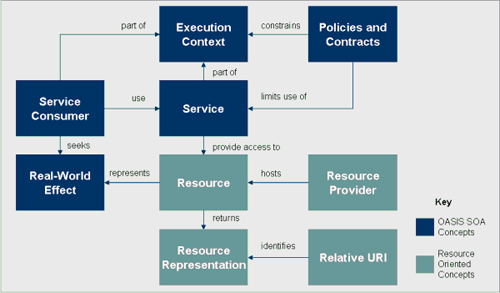

According to a 2008 Gartner Survey1 there has been an increase in the number of organizations implementing web services using Representational State Transfer (REST) and Plain Old XML (POX).
During any BPMS demo, the vendor will demonstrate how the application handles the review and approval cycle of some work product, e.g., a document, form, or report. Review and approval of these products is a process cycle that all businesses share, and in my opinion, one that’s entirely too common. Reviews aren’t disappearing anytime soon. They are in some cases a necessary evil. However, let’s be clear – reviews aren’t value added activities.
Business Rule Management Systems (BRMS) have been described as the ultimate platform to achieve true collaboration. By bridging the gap between business and technology, two previously disparate groups that did not speak the same language could now do so in the universal language of business rules. And to a certain extent these systems met that goal. However, there have been persistent nagging issues centered around things like requirements and change management that seem to keep getting in the way of collaboration and, ultimately, true agility.
One of the interesting BPM debates I’ve been following in the past months has been about the relevance of BPM technology standards such as BPMN and BPEL (with some protagonists claiming that BPEL isn’t powerful enough as a modelling or implementation language to express the richness of some processes; and others claiming that in fact it’s just fine – for example, see the online debate between Keith Swenson and Ismael Ghalimi.
Today’s economic pressures are resulting in an increasing scrutiny on IT budgets and how to achieve the best return on investment. IT project portfolios are constantly evaluated by the CIOs in light of new budgets and constraints. Clearly IT spending is on the fall, significant budgets cuts are on way, and new initiatives are impacted. BPM initiatives that had initially made their way into the portfolio are now being re-evaluated given the upfront capital cost of procuring Hardware and software.
As much as business drivers cannot be divorced from an effective and successful supply chain, the same is true for Business Process Management (BPM) that could help raise the bar for supply chain.
Supply chain in Organizations are very complex with numerous distribution types and channels, in house and outsourced factories, third party warehouses, logistics and suppliers with varied contracts, etc. Enterprise Resource Planning (ERP) software enabling supply chains greatly increase the availability of current information.
In the transition from the Information Age to the Process Age, we need new thinking and methods to design products and services for the agile business environment. Processes demand a new paradigm that expects more from managing a business and creating solutions than the current information-oriented paradigm. We need methods that are fit for working with processes to replace our methods for working with information, as they aren’t built on the necessary concepts.
Service-Oriented Architecture (SOA) is a highly collaborative paradigm, and attempts to break down the invisible barriers between IT and business. A critical step to be undertaken when implementing a SOA is to identify, specify, catalog and document candidate services. Given the sheer complexity of the task, this is more of an art, rather than a science. However, there do exist some common-sense principles and best practices for this purpose.
Does it still matter what matters in Enterprise IT? Even before the current harsh times the field seemed to be a land of confusions and illusions, from CIOs greatly overestimating their departments’ and their own role in the eyes of their CEOs1, to business analysts continuously unable to get exactly what they need when they need it from their IT counterparts. And to a respectful analytical firm putting as much confusion as possible in one sentence: “Although the word ‘SOA’ is dead, the requirement for service-oriented architecture is stronger than ever” (sic!).
Over time, organizations have been increasing their interest in process management institutionalization. The growing complexity and scope of processes, and the frequency with which process modeling, improvement, deployment, integration and coordination occur require companies to structure in such a way as to manage their processes [2][5]. In such a context, organizations have sought concepts and guidelines towards structuring a process center of excellence [1][3].
Everyone starts here.
You're looking for a way to improve your process improvement skills, but you're not sure where to start.
Earning your Business Process Management Specialist (BPMS) Certificate will give you the competitive advantage you need in today's world. Our courses help you deliver faster and makes projects easier.
Your skills will include building hierarchical process models, using tools to analyze and assess process performance, defining critical process metrics, using best practice principles to redesign processes, developing process improvement project plans, building a center of excellence, and establishing process governance.
The BPMS Certificate is the perfect way to show employers that you are serious about business process management. With in-depth knowledge of process improvement and management, you'll be able to take your business career to the next level.
|
Courses
|
|
|
|
Courses
|
|
|
|
Courses |
|
|
Business Architecture
|
|
|
|
Courses
|
|
|
|
Courses |
Certificate
|
|
Courses |
Certificate
|
|
Courses |
Certificate
|